
Care is part of the route
Six old 4x4s burn fuel, and we say so openly. Everything else we keep as light as we can: small groups, camps instead of lodges, no new tracks — and a journey price that stays where the wilderness is protected.
Home Conservation
How Namibia does it
Namibia wrote the protection of nature into its constitution in 1990, the first country in Africa to do so. The real key came in 1996: since then rural communities have been allowed to manage the wildlife on their land and to live from it. Where wild animals bring income, they are protected rather than hunted — and the numbers have come back.
Wilderness as a neighbour
- Communal conservancies
- 86
- run by the communities themselves
- of the country
- ≈20%
- lies in conservancies — more than in all national parks
- KAZA conservation area
- 520,000km²
- five countries, the largest transfrontier area on earth
- Constitution
- 1990
- Article 95: conservation as a state objective
Conservancies instead of fences
In the conservancies, communities appoint their own game guards, count the herds and decide on tourism and hunting quotas. Income from campsites, lodges and concessions pays for schools, water points and salaries. More than 200,000 people live within this system — and elephants, lions and rhino with them.
The free-roaming rhino
The Kunene holds the world’s largest free-roaming population of black rhino, outside any park. Save the Rhino Trust has guarded them since 1982 with trackers from the surrounding villages. Being allowed to drive there is a privilege, not a given.
KAZA: five countries, one wilderness
In 2011 Angola, Botswana, Namibia, Zambia and Zimbabwe linked their parks along the Okavango and the Zambezi into a single conservation area, with the old elephant migration routes at its heart. They are exactly the five countries we travel.


Honest about fuel
What we do to make the sums add up
An old V8 easily burns 20 litres per 100 kilometres on sand and gravel. We do not dress that up. We make sure every litre buys as much wilderness as possible and leaves as few traces as possible.
- per 100 km
- ≈20l
- a 1989 V8 on the track — no secret
- vehicles, never more
- 6
- small groups, full cars
- new tracks
- 0
- we stay on existing tracks
- built, still in service
- 1989
- repair instead of replace
Fivelevers
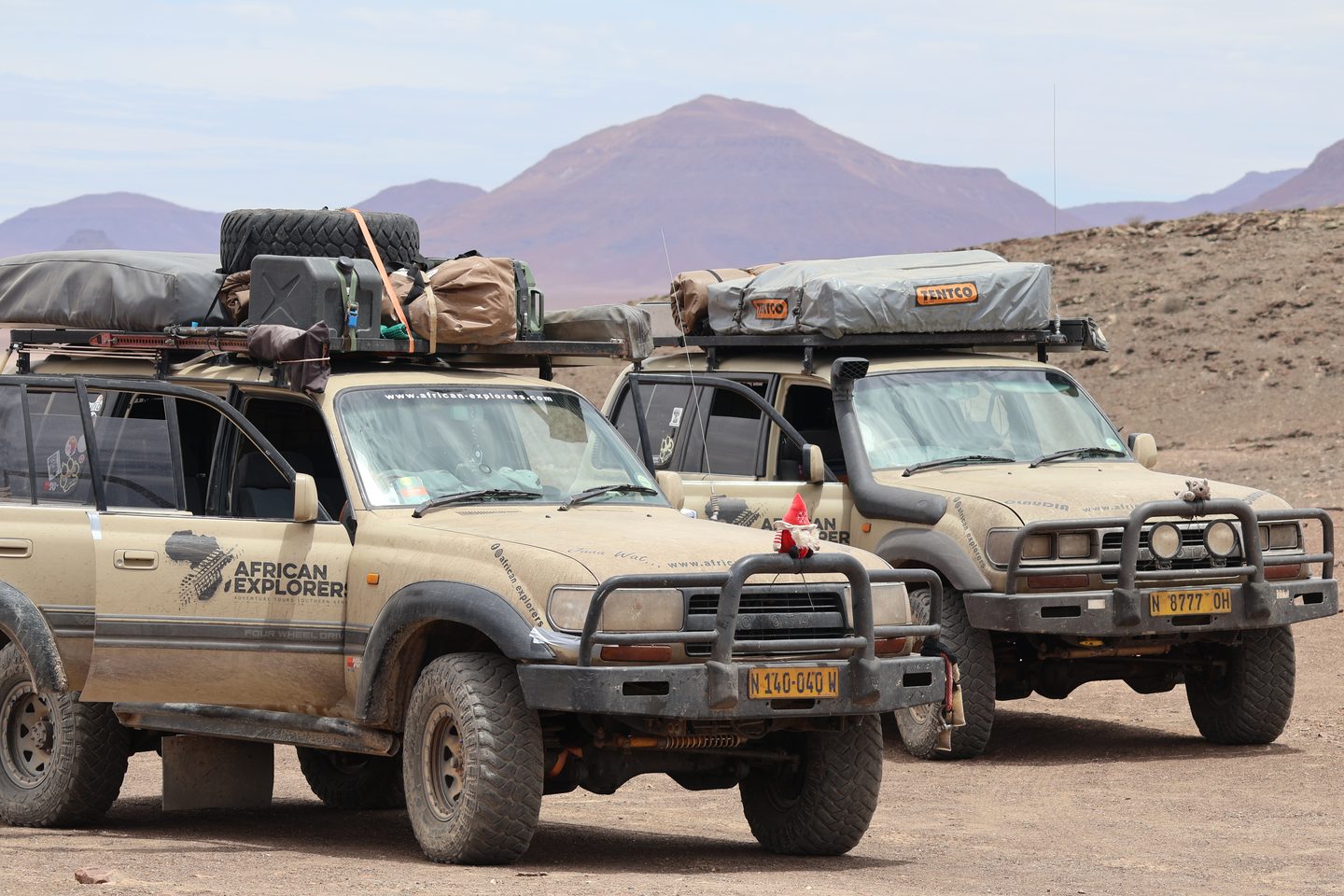
- 01Small groups, full cars
Fuel per person, not per vehicle
We travel with six vehicles at most and fill them. Per person, consumption is no higher than a rental car on the same route — except that we reach places nobody else sees, and stay two or three nights instead of moving on every day.
- 02Old is sustainable
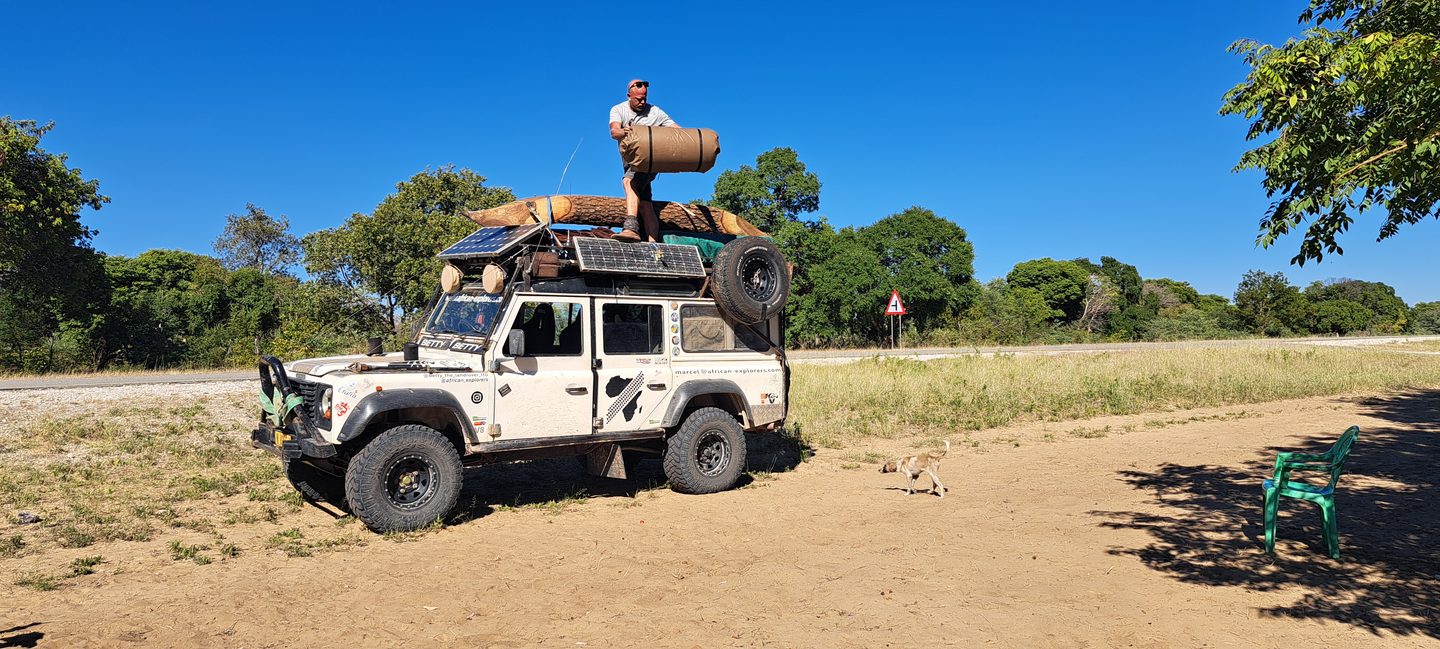
Repair instead of replace
A new 4x4 costs tonnes of CO₂ in manufacturing long before its first kilometre. Our Defenders and Land Cruisers have been working for more than thirty years. We keep them alive, part by part — the most climate-friendly fleet we could have.
- 03Stay on the track
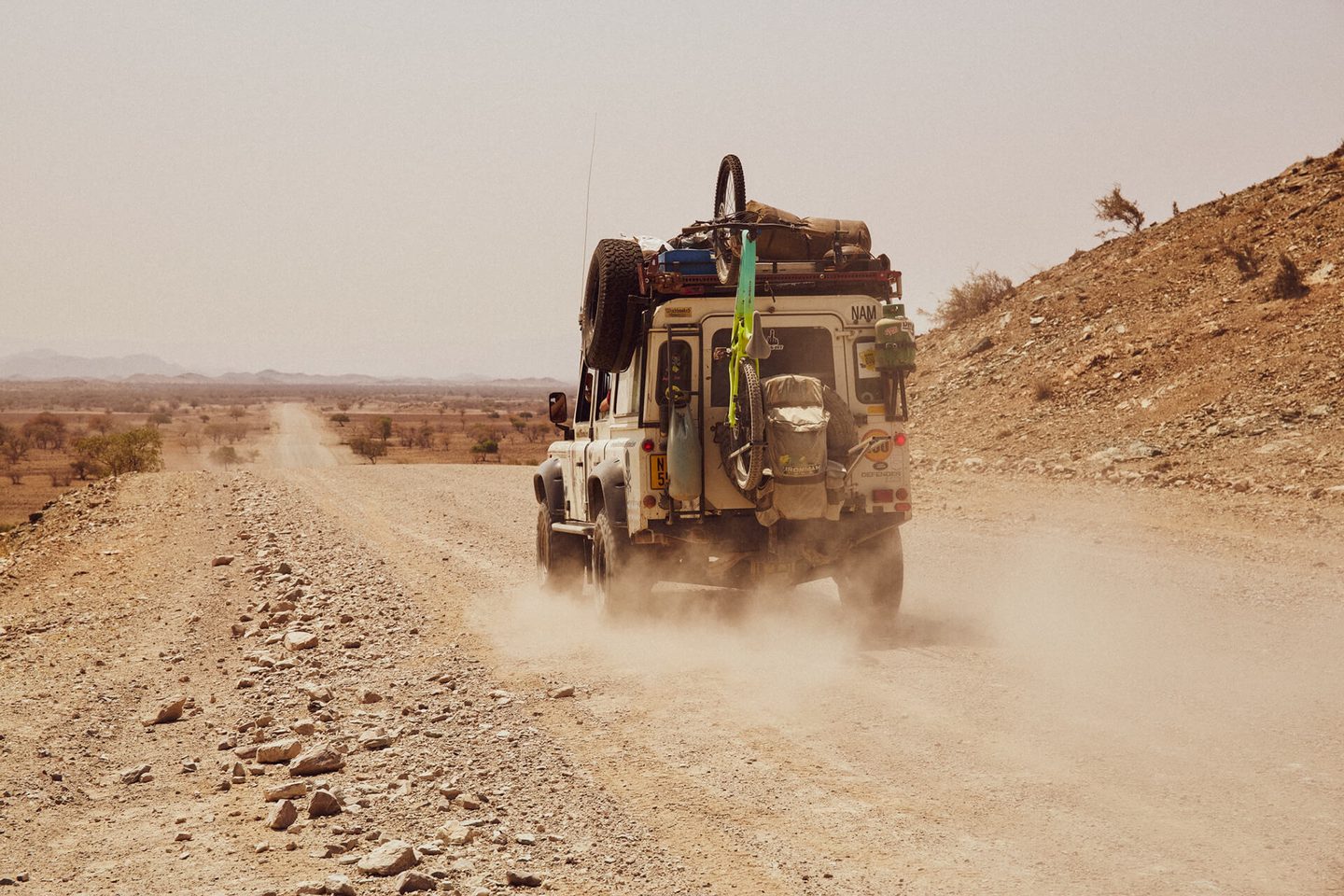
No new tracks in the desert
On the gravel plains of the Namib a tyre track stays visible for decades; the lichens that grow there need a century. So we drive only on existing tracks and on riverbeds that are open for it — even when the shortcut is tempting.
- 04Camp instead of lodge
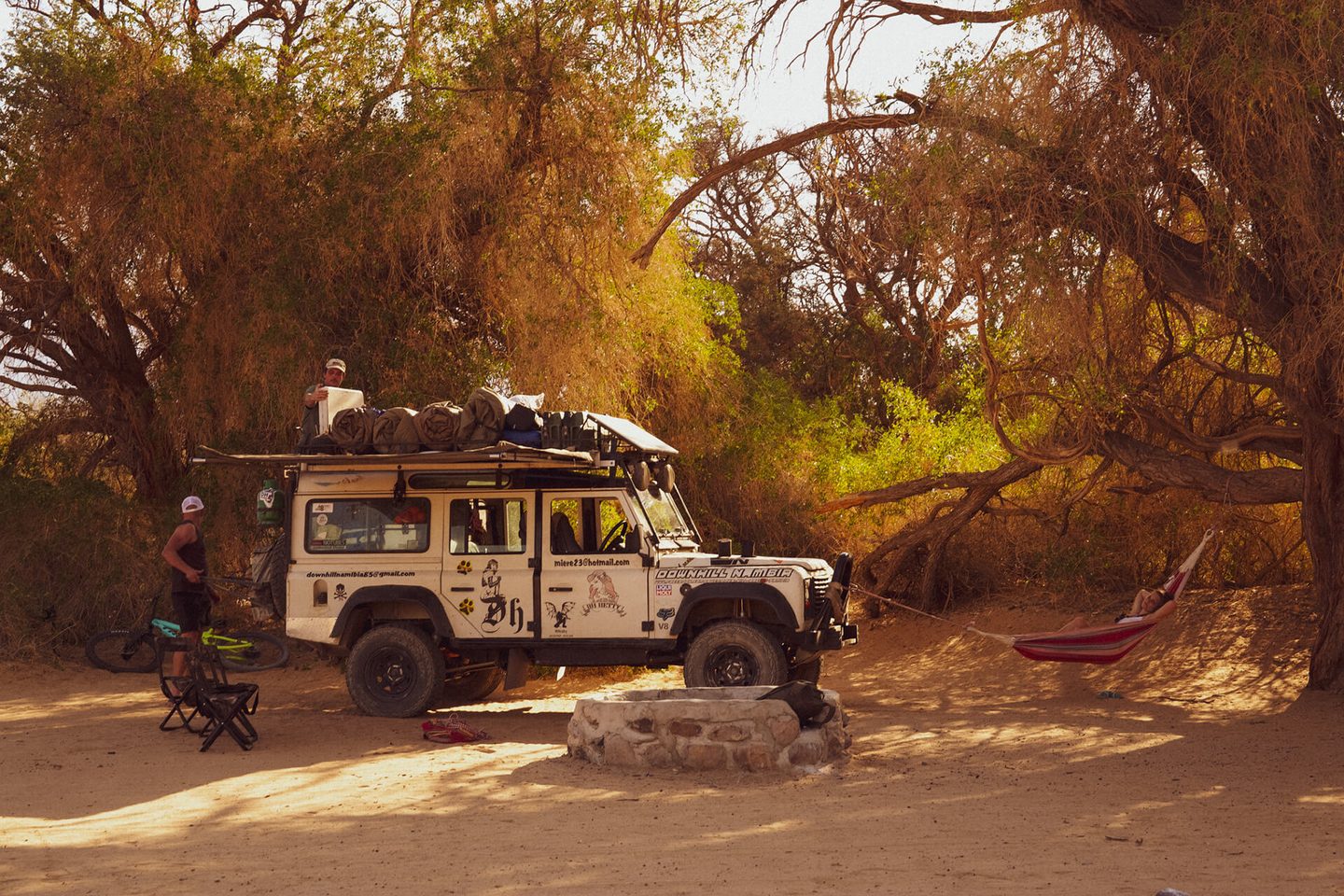
Sun instead of generator
A camp needs no pool, no air conditioning and no laundry. Fridges and lights run on the solar panels on the roofs, cooking is on gas, and water is scarce enough that everyone learns to handle it. What we bring in, we take out.
- 05The price stays local
Fees that pay for wilderness
Park fees fund rangers and fences, camp fees in the conservancies stay in the community, and we buy food, firewood and diesel along the way rather than in the capital. Wherever we can, we sleep in camps and guesthouses owned by the people who live there.
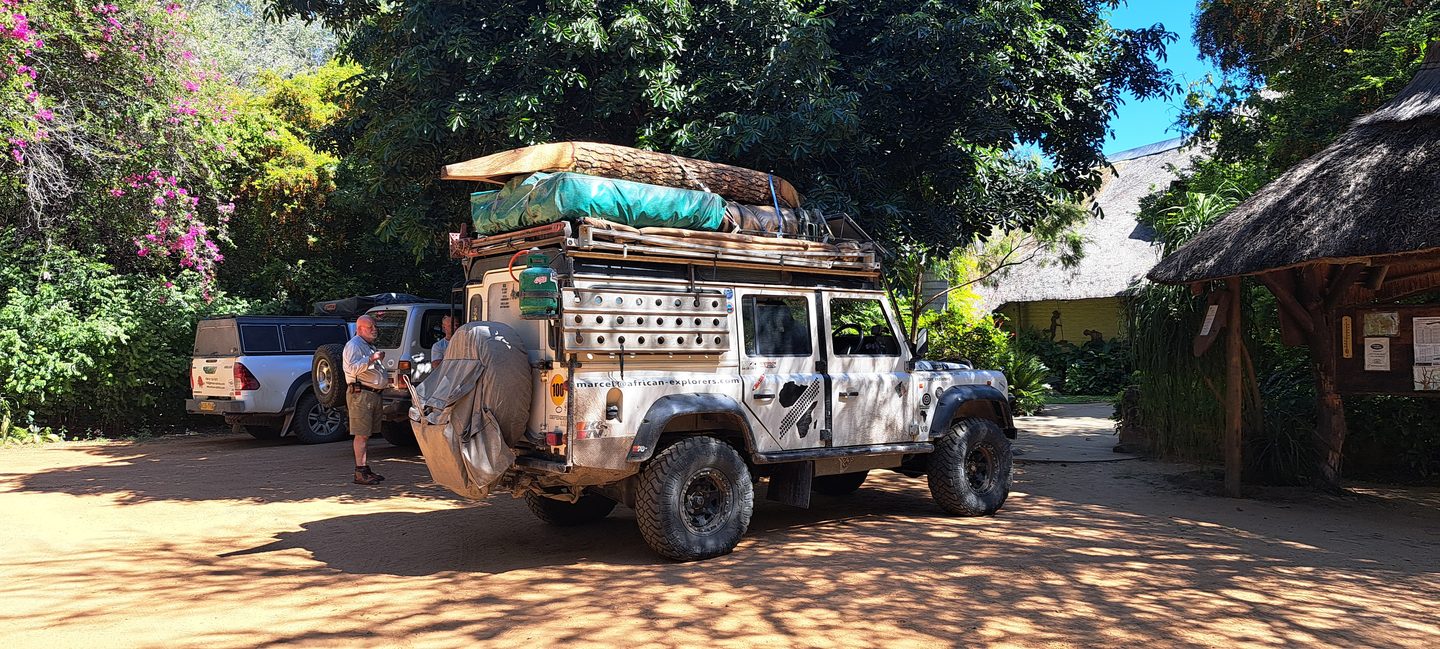


In camp and in the parks
Our rules, since day one
None of this is complicated. Together it decides whether a place still looks the same in ten years.
How we do it
Wildlife has right of way, always. Whoever meets an elephant herd at the water waits — and does not drive through.
What you can do
The biggest item is the flight
- 01
Fly direct, stay longer
The flight to Windhoek weighs more than three weeks of track. If you come, stay: extend the journey rather than flying twice.
- 02
Offset
For the flight we recommend offsetting through verified projects, Gold Standard for instance. It does not undo the flight, but it counts.
- 03
Pack light
Every kilo on the roof rack costs fuel. You get a packing list from us; a refillable water bottle is always on it.
- 04
Buy locally
Crafts from the roadside, the beer from Windhoek, the guide from the village: every dollar that stays in the region is an argument for the wilderness.
Good to know
What guests ask us about this
Questions and answers
How much fuel does an expedition in your vehicles use?
A 1989 Defender with the 3.5-litre V8 burns around 20 litres per 100 kilometres on sand and gravel, a Land Cruiser 80 a little less. Over a two-week loop that adds up to several hundred litres per vehicle — shared by three to four guests. Per person that is roughly a rental car on the same route, except that we stay longer in one place.
Is camping in Namibia greener than a lodge?
Usually, yes. A camp needs no pool, no air conditioning and no laundry. Our fridges and lights run on solar panels and we cook on gas. Camp fees in communal conservancies stay in the community. What we bring in, we take out — including the rubbish.
Why don’t you drive newer, more economical vehicles?
Because manufacturing a new 4x4 costs several tonnes of CO₂ before its first kilometre. Our Defenders and Land Cruisers have been working for more than thirty years and can be repaired in the bush with simple tools. Keeping them alive is the most climate-friendly fleet we could have.
What are communal conservancies?
Areas in which rural communities in Namibia have been allowed, since 1996, to manage the wildlife on their land and to live from it. There are 86 of them, covering about a fifth of the country. Income from tourism pays for game guards, schools and water points — and elephant, lion and rhino numbers have recovered.
Are you allowed to drive off-track in the national parks?
No, and we would not want to. On the gravel plains of the Namib a tyre track stays visible for decades and lichens take a century to regrow. We drive only on existing tracks and in riverbeds that are open for it — in parks and conservancies alike.
How close do you get to wildlife?
As close as the animal allows without changing its behaviour. At sightings we switch the engine off, keep our distance from elephants and rhino, never feed or lure, and never drive at night. If a herd arrives at the water, we wait. It has right of way.
Can I offset my flight to Namibia?
Yes. The flight is the biggest item of your journey, well ahead of three weeks of track. We recommend offsetting through verified projects, Gold Standard for instance, plus a direct flight and a longer stay instead of two trips.
What is the KAZA conservation area?
The Kavango–Zambezi Transfrontier Conservation Area, since 2011 the largest transfrontier conservation area on earth: around 520,000 square kilometres across Angola, Botswana, Namibia, Zambia and Zimbabwe, holding the migration routes of Africa’s largest elephant population. They are exactly the five countries we travel.

Plan a journey
Questions about parks, practice or offsetting?
We are happy to answer in detail — and to plan a route with you that sits as lightly on the land as possible.
Ask us