
Camping in Namibia
Under the clearest night sky you have ever seen: Namibia is a country made for camping. A few things are worth knowing first.
Home Destinations Namibia Camping
In short
In Namibia you usually camp in a roof tent on top of a 4x4, at campsites in the national parks, at lodges or in community camps. Wild camping is prohibited in the parks and otherwise allowed only with the permission of the landowner or the community. A site in Etosha costs 460 to 560 Namibian dollars per person per night in 2026, depending on the season, and is often booked months ahead in high season. And in winter the nights get cold, below freezing in the desert.
Campsites
Where you can stay
Four kinds of sites, from the national park camp with a shop to the site with no facilities at all.
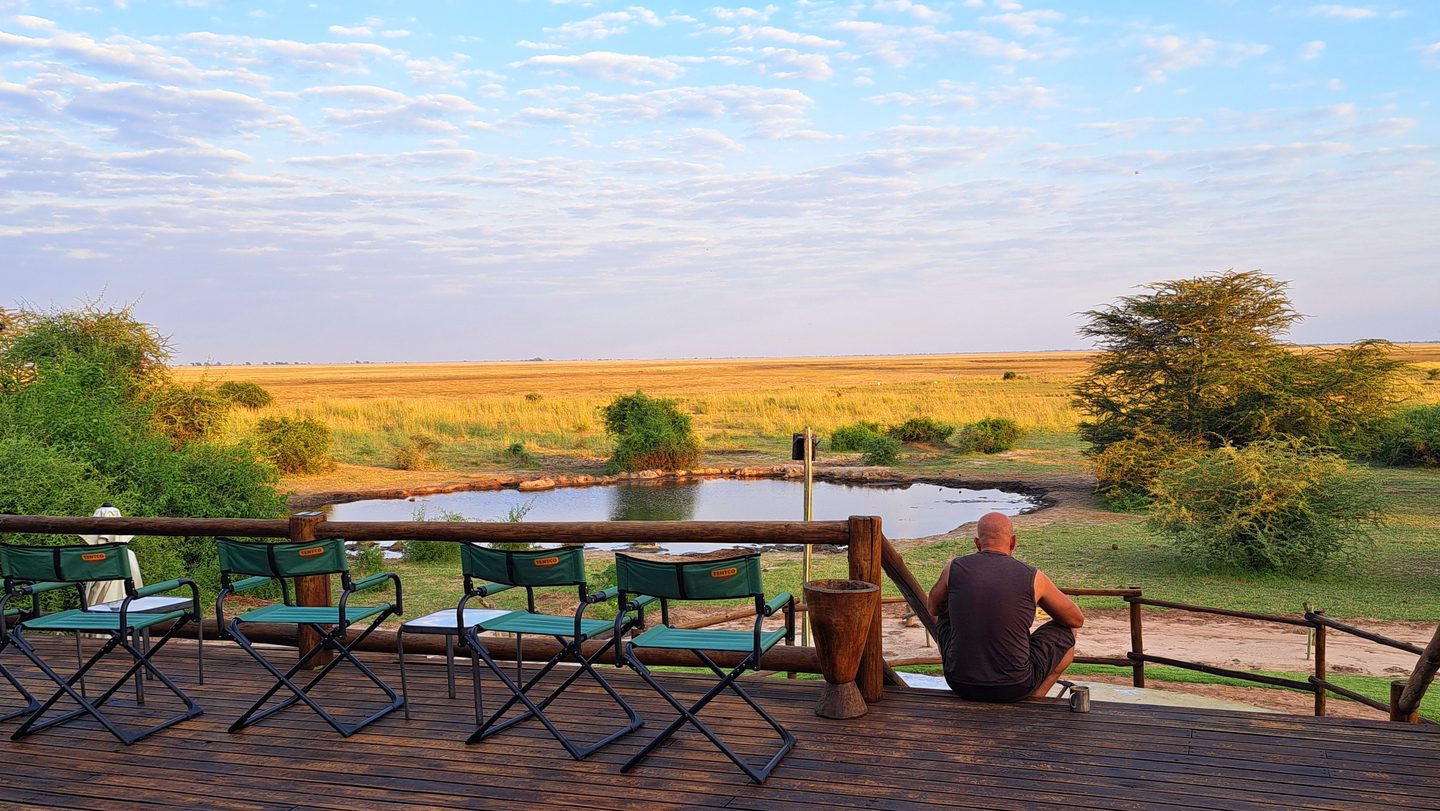
National parks
NWR camps
In Etosha (Okaukuejo, Halali, Namutoni, Olifantsrus) and at Sesriem: ablution blocks, braai places, some power points, a shop and fuel. In 2026 a night costs 460 to 670 Namibian dollars per person.
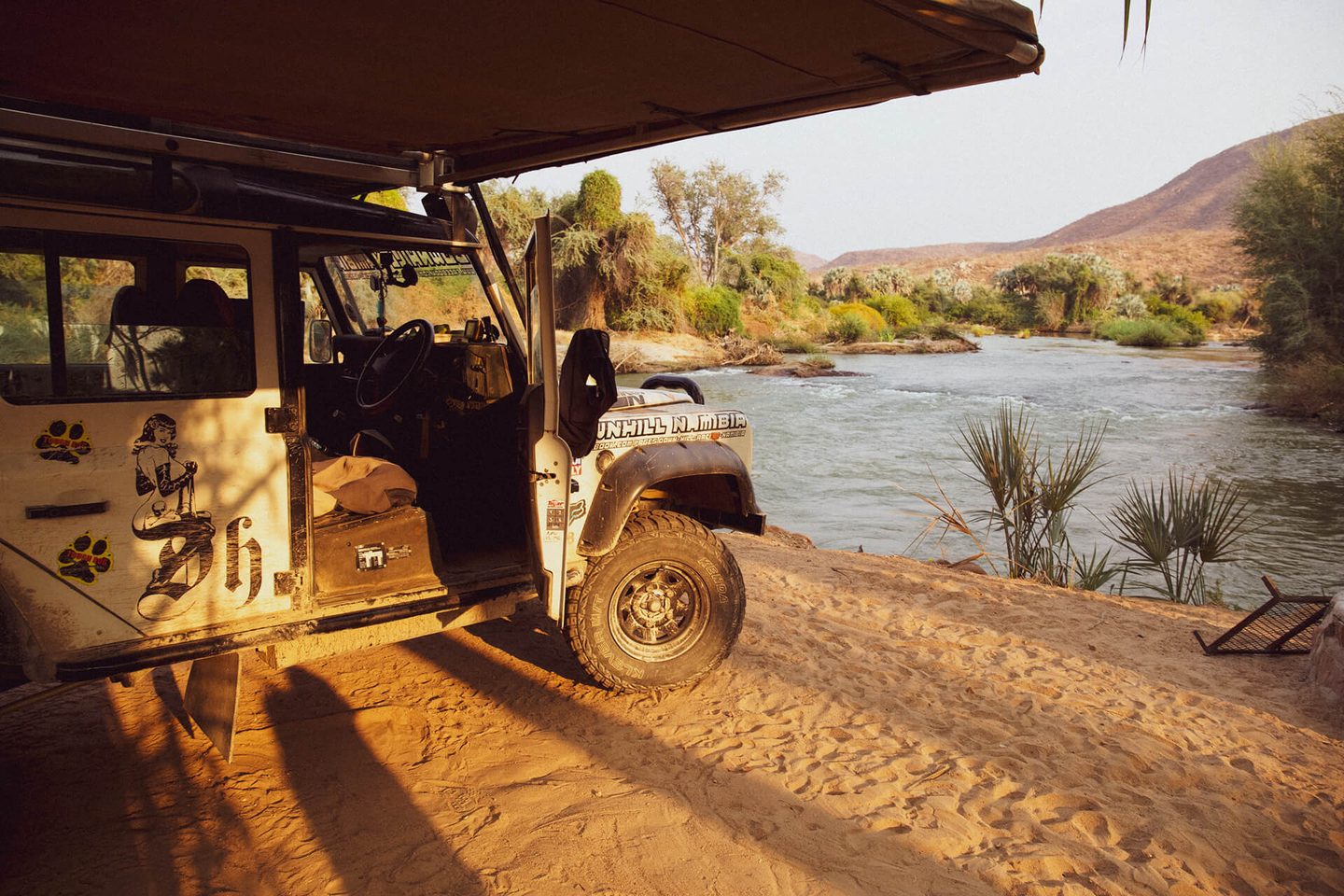
Lodges
Lodge campsites
Many lodges have their own sites, often with power, a tap and a braai at each pitch and access to pool and restaurant. At Epupa Falls, for example, for about 360 Namibian dollars per person.
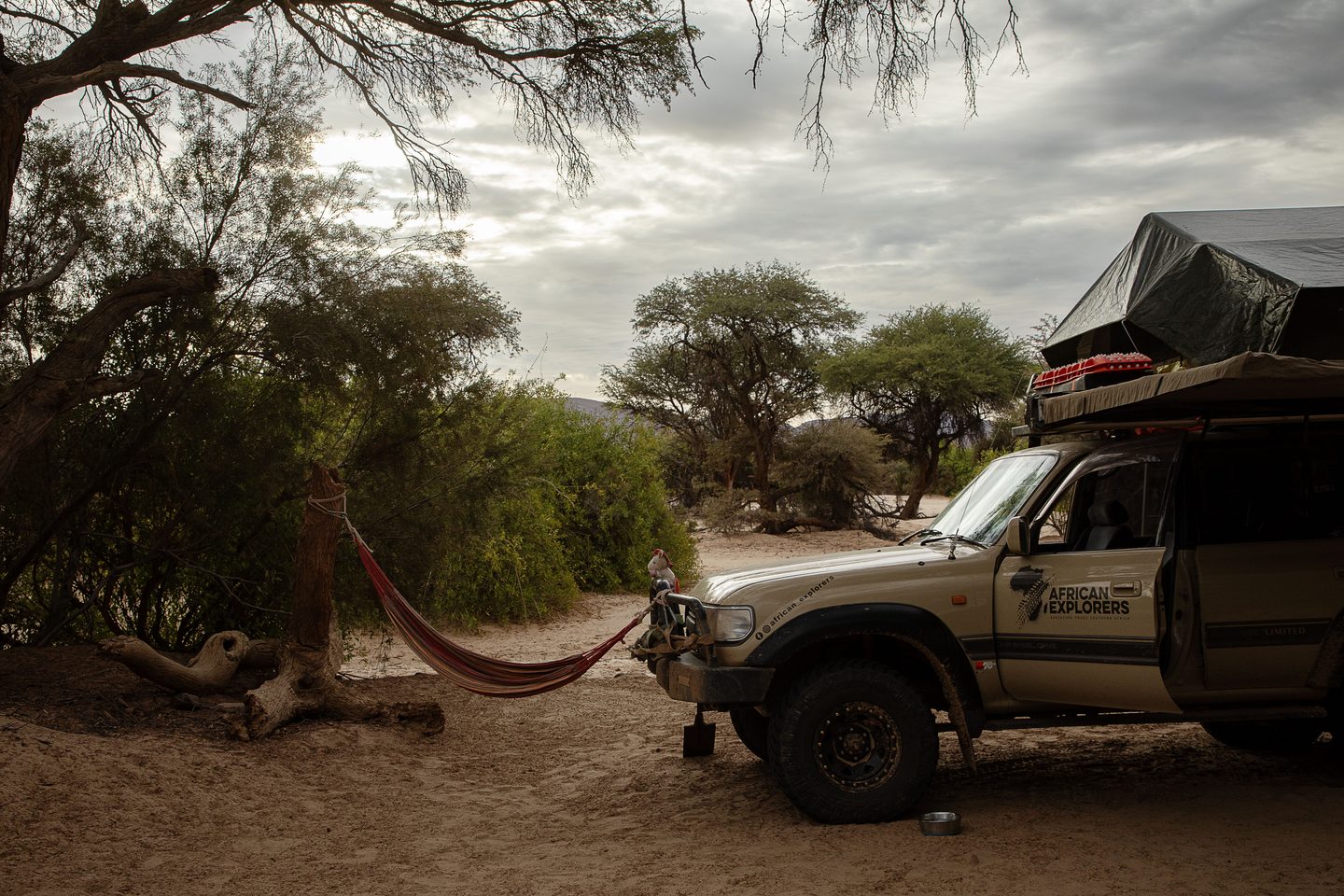
Communities
Community camps
In the northwest, communities and conservancies run simple, often beautifully placed sites: Khowarib, Ongongo with its warm rock pool, Okarohombo on the Kunene. Usually cash only, often without booking.
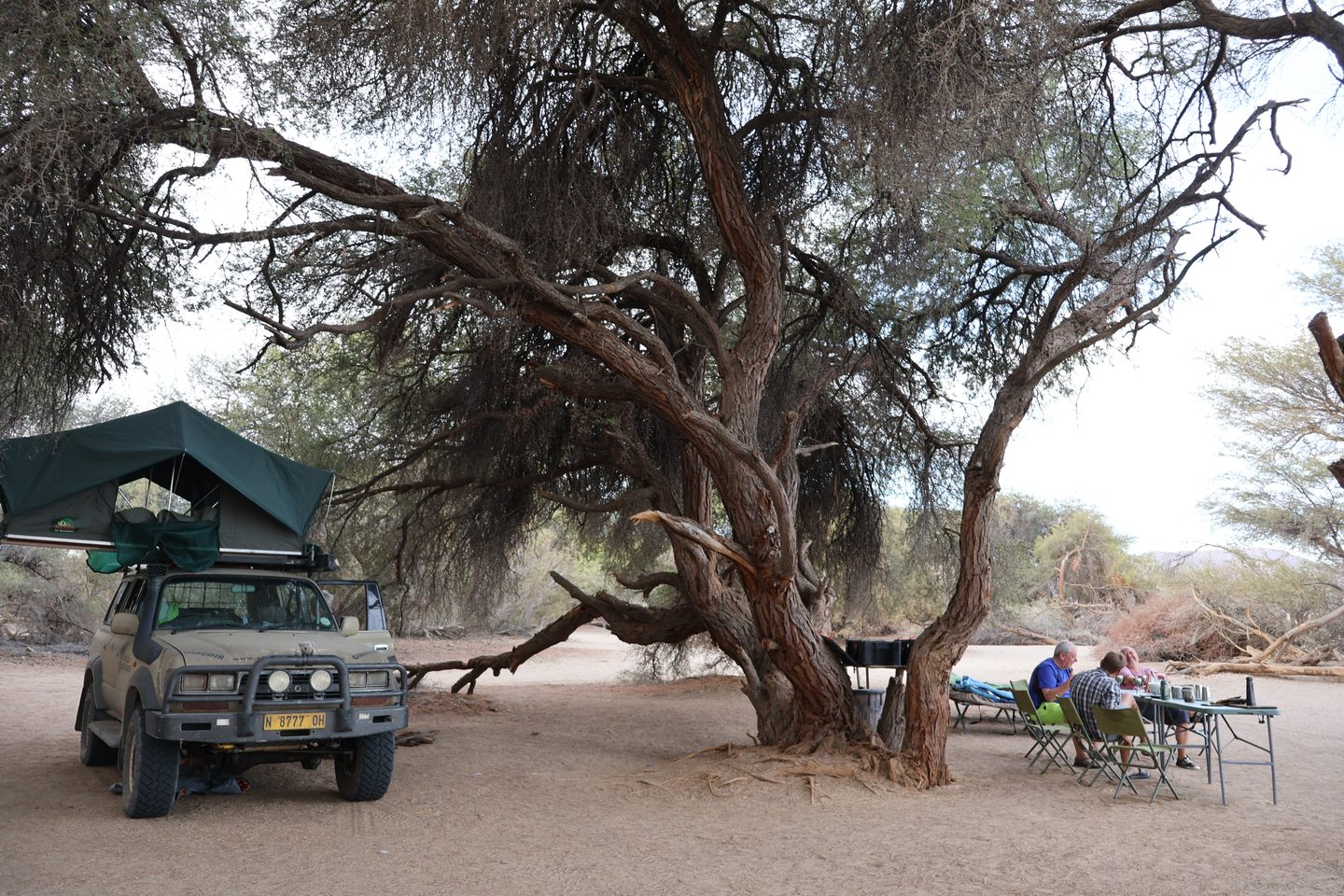
No facilities
Sites in the wild
In concession areas such as Palmwag there are marked sites with no water or toilets, by permit only. Elsewhere only with the permission of the landowner or the community.


Wild camping
What is allowed and what is not
Almost every piece of land in Namibia belongs to someone: the state, a farm or a community.
- 01
Never in national parks
In Etosha, the Namib-Naukluft Park and the other parks you may only stay overnight in the camps. Everything else is prohibited.
- 02
Farmland only with permission
Entering or staying on private land without the owner’s permission is an offence. Most of the land is farmland.
- 03
Communal land by agreement
On communal land you need the permission of the conservancy or the traditional authority. Some conservancies, such as in the Marienfluss, ban free camping altogether.
- 04
Safety first
The German Foreign Office advises staying only at guarded, officially registered sites. In the unfenced northwest, elephants, lions and hyenas roam the land.
At night
How cold the July nights get
Averages for July, the coldest month. With cold fronts there is frost below these averages, and nights below zero are not unusual in the desert and on the highlands.
| Day | Night | Note | |
|---|---|---|---|
| Windhoek (city) | About 22 °C | About 8 °C | Colder on the highlands around town |
| Highlands near Windhoek (airport) | – | About 2 °C | Rarely below −2 °C |
| Sesriem (Sossusvlei) | About 25 °C | About 8 °C | Frost possible at night in the desert |
| Opuwo (Kaokoland) | About 28 °C | About 11 °C | Milder in the northwest |
| Southern edge of the plateau | – | Below 2 °C | Frequent frost, occasional snow at Aus |
Roof tent
Life in a roof tent
The roof tent is the norm in Namibia: it goes up in minutes, and you sleep above sand, stones and creepy-crawlies.
- 01
Up in minutes
Unfold it, lean the ladder against it, done. Rental companies show you how at the handover.
- 02
Room for two
A roof tent is about 1.2 to 1.4 metres wide and 2.1 to 2.4 metres long, with a mattress for two. The big rental companies include bedding.
- 03
Kitchen on board
Rental 4x4s usually come with a fridge of about 40 litres, a water tank, a gas cooker and a second battery. Our vehicles have solar power and a kitchen set-up.
- 04
Pack warm
Between May and September you need a hat, a fleece and a good sleeping bag at night. During the day it is still warm.
At camp
Campsite rules
What is law in the parks is good manners everywhere else.
- 01
Fire with bought wood
Fires only at fireplaces. Buy wood instead of collecting it: camelthorn, leadwood, mopane and ana trees are protected, and you may not collect plants in parks.
- 02
Leave nothing out
Jackals and hyenas raid bins and take whatever is left outside. Keep food in boxes in the vehicle, no food in the tent, take your rubbish with you.
- 03
Never in a riverbed
Dry rivers can flow without warning in the rainy season, and elephants use them as roads. Camp on the bank, not in the bed.
- 04
Distance and quiet
Keep at least 70 metres from elephants, better more. Noise that disturbs others is prohibited in the parks, and out there every sound carries anyway.
Sources: park conditions of the Ministry of Environment (via Namibia Wildlife Resorts), NWR (fact sheet 2024, rates 2026/27), Trespass Ordinance 1962, German Foreign Office (as of 28 November 2026), Gondwana Collection (camping tips, Palmwag concession), rental terms and equipment of Asco, Bushlore and Britz, NACSO (conservancy report 2023), Tracks4Africa and iOverlander (community camps, traveller reports), Weather Spark and weather-and-climate.com (temperatures), Atlas of Namibia (frost), list of protected plants (Kolberg 2026), TOSCO and EHRA (elephants). As of 28 November 2026.
Journeys
Almost all our journeys are camping journeys: in roof tents with proper mattresses, with a hot shower where we can rig one, and dinner by the fire. On most routes there are one or two nights in rooms or lodges.
Journeys with a roof tent
View all journeys


Frequently asked
Questions about camping
Is wild camping allowed in Namibia?
Never in national parks, where you may only stay in the camps. On farmland you need the owner’s permission, on communal land that of the conservancy or traditional authority. Some conservancies ban free camping altogether.
Do you need to book campsites in Namibia in advance?
In Etosha and at Sesriem, yes: in high season from July to October sites are often taken six months to a year ahead. Community camps in the northwest can often be visited without a booking and paid in cash.
How much does camping in Namibia cost?
At the state-run camps in 2026 about 460 to 670 Namibian dollars per person per night, plus the park fee. Lodge sites cost, for example, 300 to 360 Namibian dollars per person; community camps are usually cheaper according to travellers, and some charge per site.
How cold does it get at night in Namibia?
In July, nights average roughly 2 to 11 °C. In the desert and on the highlands there is regular frost in winter. Pack a warm sleeping bag.
What is it like to sleep in a roof tent?
You sleep on a mattress for two, off the ground and usually surprisingly comfortably. The tent goes up in a few minutes. On our journeys you sleep in a roof tent with a proper mattress.
Can you make a fire in Namibia?
At campsite fireplaces, yes. Buy the wood instead of collecting it: many trees such as camelthorn and mopane are protected, and you may not collect plants in parks.
Do campsites have showers?
State-run and lodge sites do, often with hot water. Many community camps have their own shower and toilet per pitch. Sites in concession areas have no facilities.
Read on
More travel guides
When to go
Best time to visit Namibia
Month by month: temperatures, rain, wildlife and tracks in every region.
National park
Etosha
Waterholes, rest camps, park rules and the best time for wildlife.
Northwest
Kaokoland & Epupa Falls
Namibia’s most remote corner: tracks, passes, waterfalls and what to know before you go.
Trip planning
How many days for Namibia?
Routes for 10, 14 and 21 days, distances, driving times and how far you get in a day.

Plan a journey
A night under this sky
Tell us when you want to travel and how much comfort you would like. We will suggest a route with the right campsites.
Plan a journey